
DUSQ Sleep Regulation System
Reclaiming Deep, Restorative Sleep

The time spent sleeping doesn’t always reflect the quality of rest achieved. Even if sleep routines are consistent, some mornings feel more challenging than they should. What most people don’t realize is that the body can be pulled out of deep sleep dozens of times a night by disruptions so brief they never cause a full awakening and never appear in memory the next morning. These micro-interruptions prevent the body from completing the restorative work that sleep is designed to do, including memory consolidation, immune support, and physical repair that simply cannot happen while awake. According to the Sleep Foundation, the natural process of aging shifts the body toward lighter sleep stages and away from the deeper, more restorative ones, a change that has been linked to increased risk of cognitive decline, cardiovascular issues, and weakened immunity. The problem, for many people, isn’t falling asleep. It’s what’s quietly happening while they think they are.
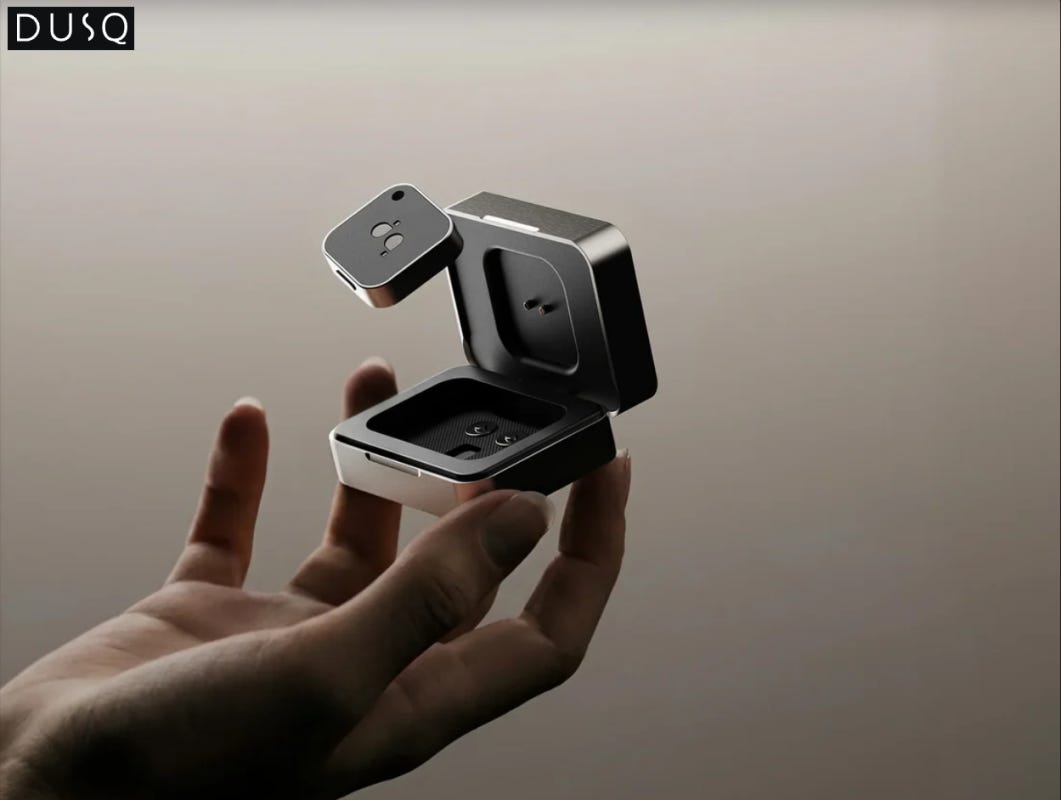
The DUSQ Sleep Regulation System was designed to address a challenge that many sleep devices cannot. Sleep trackers monitor the night and deliver a morning report, but they don’t do anything to change what happens during it. DUSQ does. Worn behind the ear like a small patch, it continuously monitors the body’s stress signals in real-time. When it detects a disruption beginning, it responds within seconds with gentle, non-invasive stimulation that guides the nervous system back toward deeper sleep before the body fully awakens. The stimulation works through two well-established pathways: one that mimics the natural drowsiness produced by rocking or a slow car ride, and another that calms the body’s stress response, much like a deep breath, delivered precisely and without requiring any conscious effort. Internal data from early users indicate a 31% increase in deep sleep and a 22% decrease in nighttime awakenings within two weeks of consistent use.
DUSQ sits flat against the bone just behind the ear, held in place by a medical-grade adhesive patch that peels away easily each morning. Each patch is designed for seven nights of use, and the starter pack covers three months, with refill packs available thereafter. The low-profile design means side sleepers rarely notice it against a pillow, and the companion app builds a picture of sleep trends over time rather than delivering a single nightly score, which is more useful for recognizing what is actually changing week to week. It is worth noting that DUSQ is not appropriate for anyone with a pacemaker, cochlear implant, or other active implanted medical device, and those with epilepsy or seizure disorders should consult a physician before use. The first production batch is scheduled to ship in August 2026, with early access reservations currently available for approximately $249.
What sleep is actually doing through the night matters here, because every disruption cuts that process short rather than allowing it to build. The body uses deep, uninterrupted sleep to regulate cortisol, consolidate the day’s memories, and complete physical repair that accumulates quietly when those hours are fragmented. For anyone managing a chronic condition, recovering from illness, or trying to maintain the mental clarity that supports daily independence, that interrupted repair shows up in ways that become harder to ignore over time. Caregiving families often recognize the pattern before anyone names it, in the foggier thinking, the lower tolerance for activity, the days that feel disproportionately hard, given how much time was spent in bed. DUSQ doesn’t promise perfect sleep, but it addresses the mechanism that has been quietly undermining it, and for many people, that turns out to be exactly what they need.
https://dusq.com/
Tags: #dusq, #dusqsleep, #sleephealth, #sleepquality, #sleepregulation, #sleeptracker, #sleeptechnology, #cognitivehealth, #sleepscience, #restorativesleep