
CONNEQT Pulse
Beyond Blood Pressure: Clinical Measurement of Arterial Health

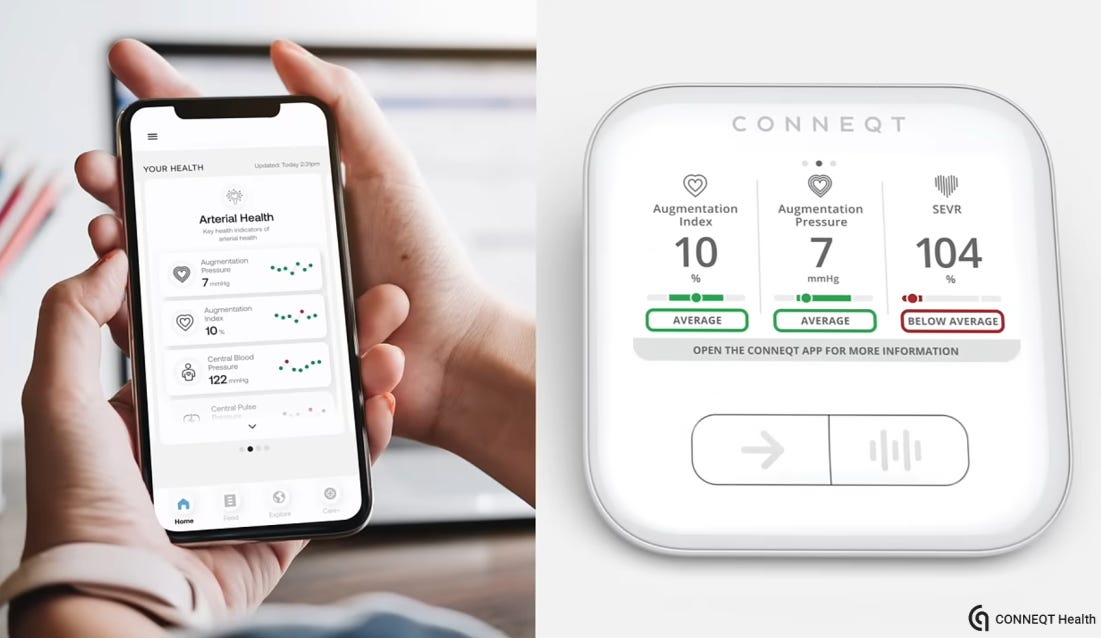
For older adults managing hypertension or high cholesterol, checking their blood pressure at home has become as routine as taking medications. The cuff goes on, a number appears, and that number becomes the day’s measure of cardiovascular health. It’s a reasonable habit, and one that puts meaningful health information directly in their hands. But standard blood pressure is only part of the picture. A conventional arm cuff captures pressure at the periphery, far from the heart, and cannot account for arterial stiffness, the gradual hardening of the arteries that naturally occurs with age and that builds pressure closer to the heart in ways a peripheral reading will never show. An older adult may show a perfectly unremarkable arm reading while quietly carrying elevated central pressure, a distinction that matters enormously when it comes to stroke, heart failure, and kidney disease.
The CONNEQT Pulse represents a new generation of home monitors, bringing clinical-grade vascular analysis to a home health monitoring routine. Built on SphygmoCor technology, a platform used for over two decades at institutions including the Mayo Clinic and Cleveland Clinic, it does considerably more than measure standard blood pressure. When the cuff inflates, it analyzes the behavior of the pulse wave traveling through the arm and uses that data to calculate what is happening at the aorta, the artery closest to the heart. The result is a clearer picture of how hard the heart is actually working and how much the arteries have stiffened over time. The device has FDA clearance and is listed on the U.S. Blood Pressure Validated Device List, meaning its accuracy has been independently verified to clinical standards.
The CONNEQT Pulse is priced at approximately $289 and is straightforward to use for anyone comfortable with a standard blood pressure monitor. The cuff process is essentially identical, and readings sync to a companion app. The additional vascular metrics are most meaningful when tracked as trends over time rather than interpreted as single numbers (sharing that data with a physician will help put the readings in context). For caregivers managing a loved one’s cardiovascular health from a distance, access to trending central pressure data, rather than occasional spot readings, offers a more complete and useful view of how well a treatment plan is actually working.
For older adults who have been monitoring blood pressure for years and want a more complete understanding of their cardiovascular health, the CONNEQT Pulse offers something that almost no other home device currently provides: key insights into the structural health of the arterial system itself. Peripheral pressure tells part of the story. Central pressure tells the rest of it. It’s also worth noting that most home monitors should be replaced every three to five years, and readings should be checked against a calibrated clinical device during annual checkups. For anyone who is already due for an upgrade, choosing a device that measures central aortic pressure alongside standard blood pressure is a meaningful step toward a more proactive and informed view of their cardiovascular health.
https://conneqthealth.com/
Tags: #conneqtpulse, #cardieux, #bloodpressuremonitor, #hearthealth, #hypertension, #cardiovascularhealth, #homehealthmonitoring, #arterialhealth, #bloodpressure